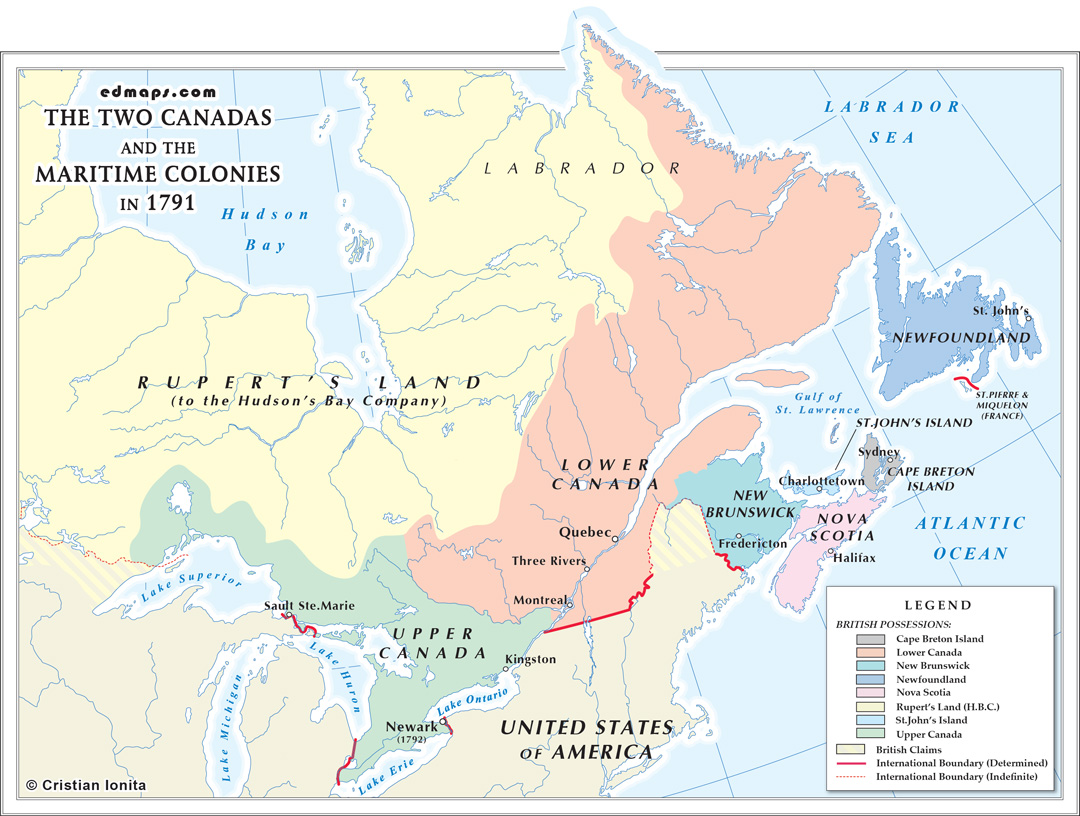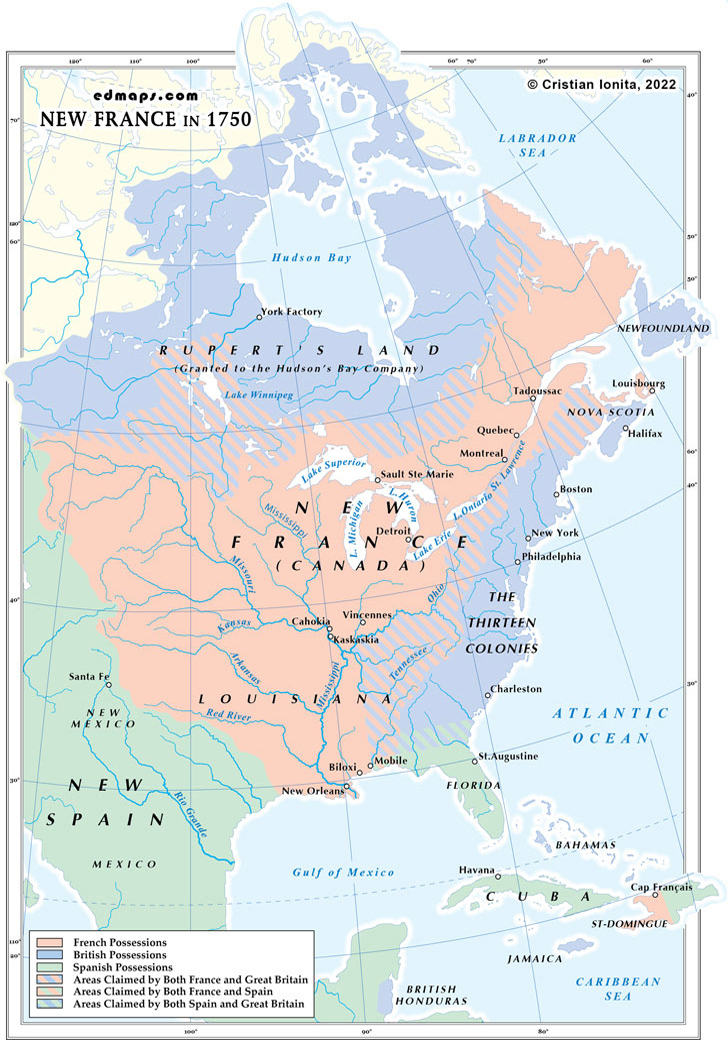
The Constitutional Act of 1791 fundamentally restructured British North America, dividing the former Province of Quebec into distinct administrative divisions while establishing new governmental frameworks for Canada's territorial organization.
The act's most significant change created two separate provinces from Quebec. Lower Canada encompassed the St. Lawrence River valley and eastern territories, retaining the predominantly French Catholic population of approximately 150,000 inhabitants. This province preserved French civil law, the seigneurial land system, and Catholic religious privileges. Upper Canada comprised the Great Lakes region and western territories, intended primarily for English-speaking Protestant settlers and American Loyalists who had fled during the Revolutionary War.
Each province received its own lieutenant governor, appointed legislative council, and elected assembly, though the governor-general in Quebec City maintained overall authority over British North America. Lower Canada's capital remained at Quebec City, while Upper Canada established its first capital at Newark (later Niagara-on-the-Lake), though it would move to York (Toronto) in 1793.
Nova Scotia, New Brunswick, and Prince Edward Island maintained separate provincial status. New Brunswick had been carved from Nova Scotia in 1784 to accommodate Loyalist refugees. These Maritime provinces operated under distinct governmental structures with their own lieutenant governors and assemblies.
Upper Canada's western boundary remained undefined, theoretically extending to the Pacific Ocean through British territorial claims. The southern boundary with the United States had been established by the Treaty of Paris (1783) along the Great Lakes and connecting waterways.
Native American nations continued controlling vast territories throughout the interior, particularly in the Northwest and western regions. The British maintained treaty relationships with various tribes while struggling to establish effective administrative control over territories claimed but not effectively occupied.
Governing these vast territories with limited populations and resources created ongoing difficulties, while the bicultural nature of the Canadas required delicate balance between French and English legal and cultural traditions.