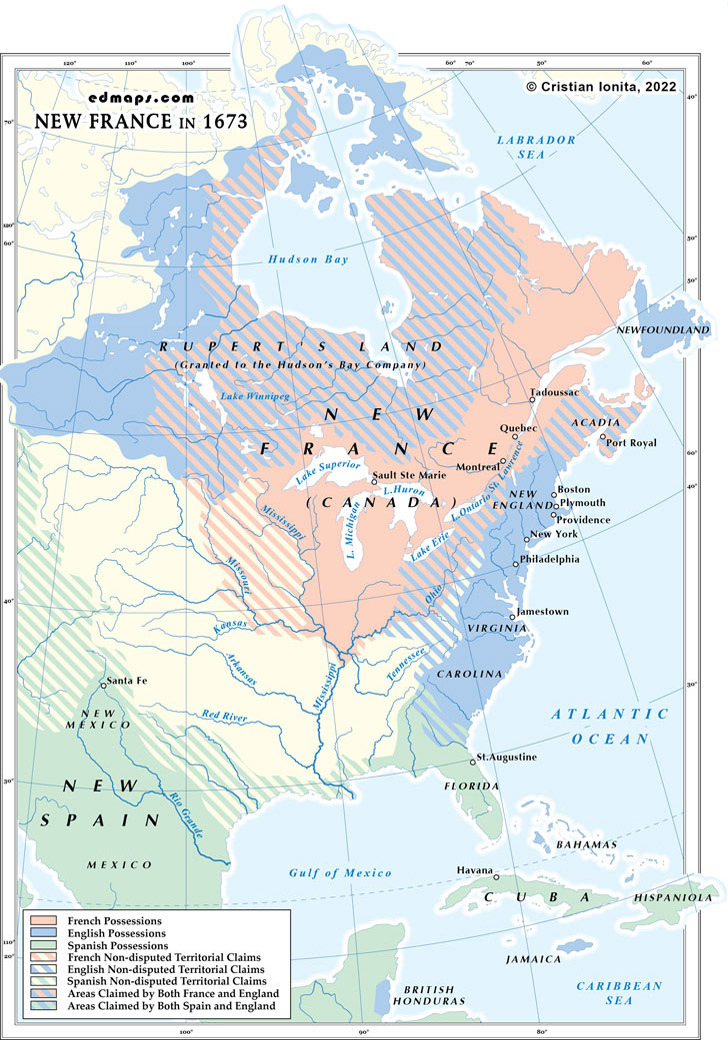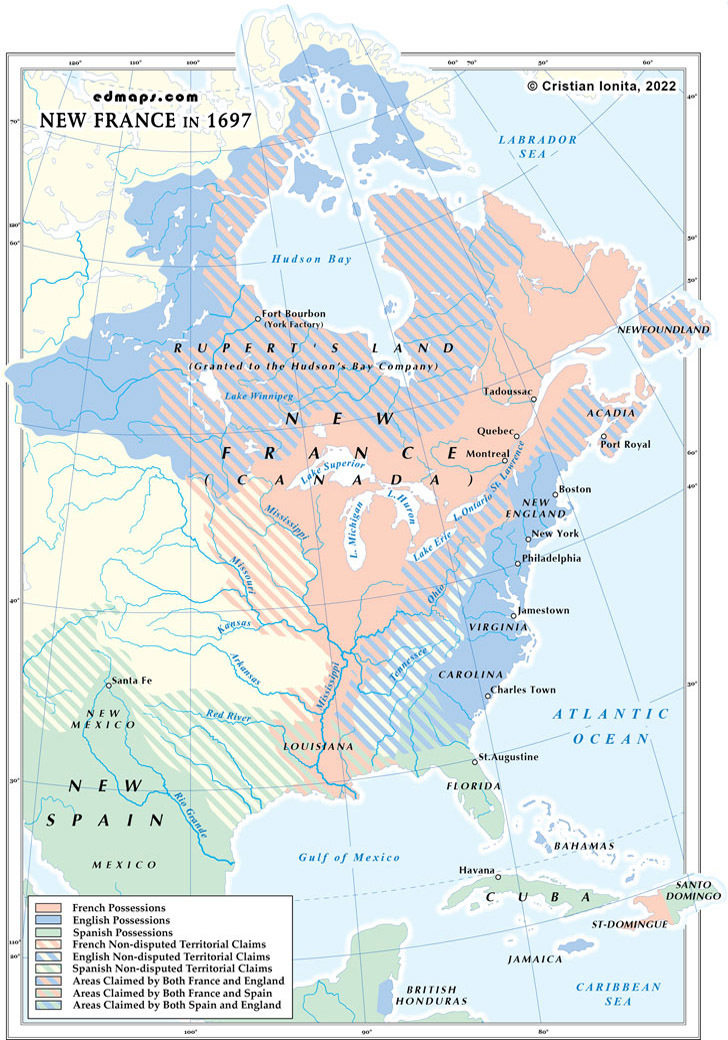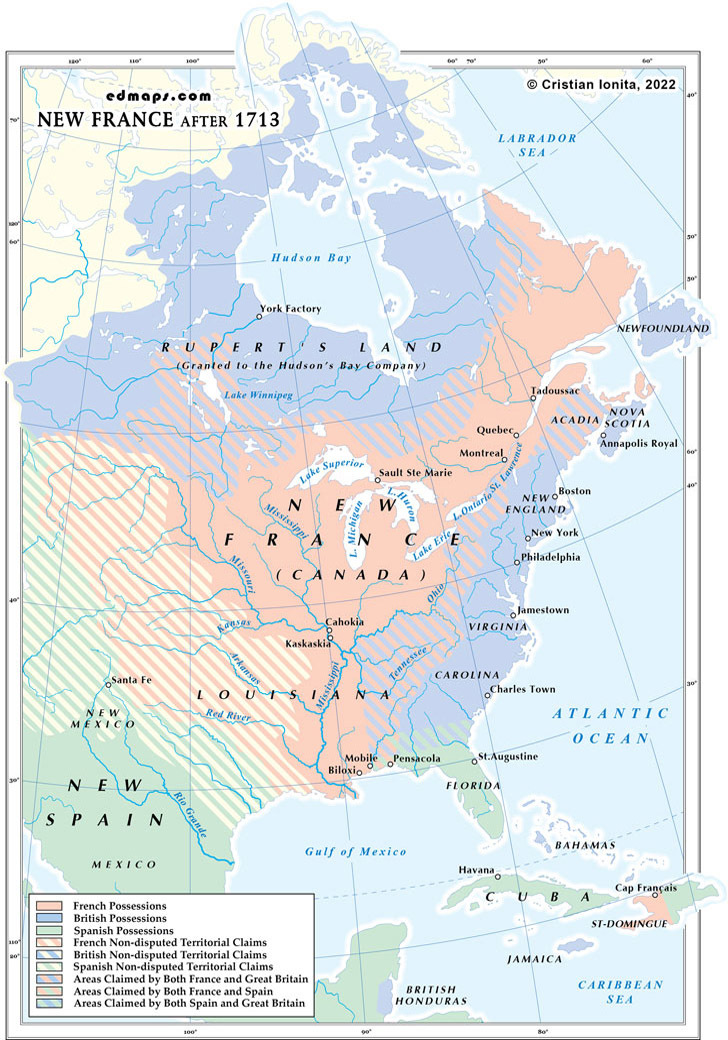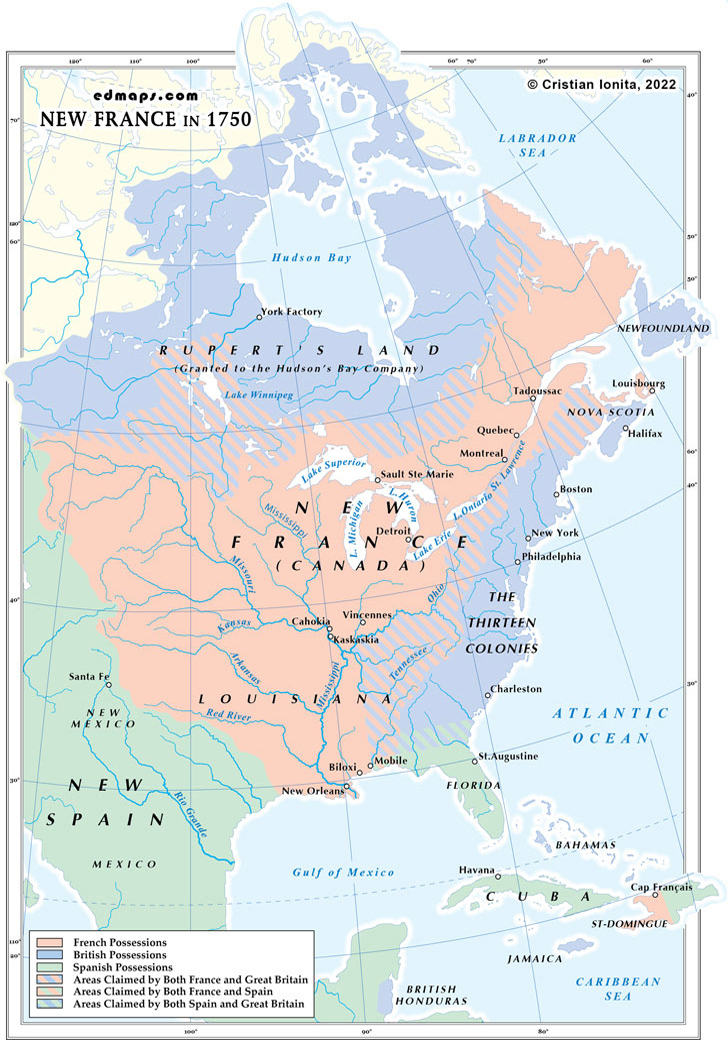
The French and Indian War (1754-1763) represented the decisive struggle for North American territorial supremacy, ultimately destroying New France as a continental empire and reshaping the entire colonial landscape.
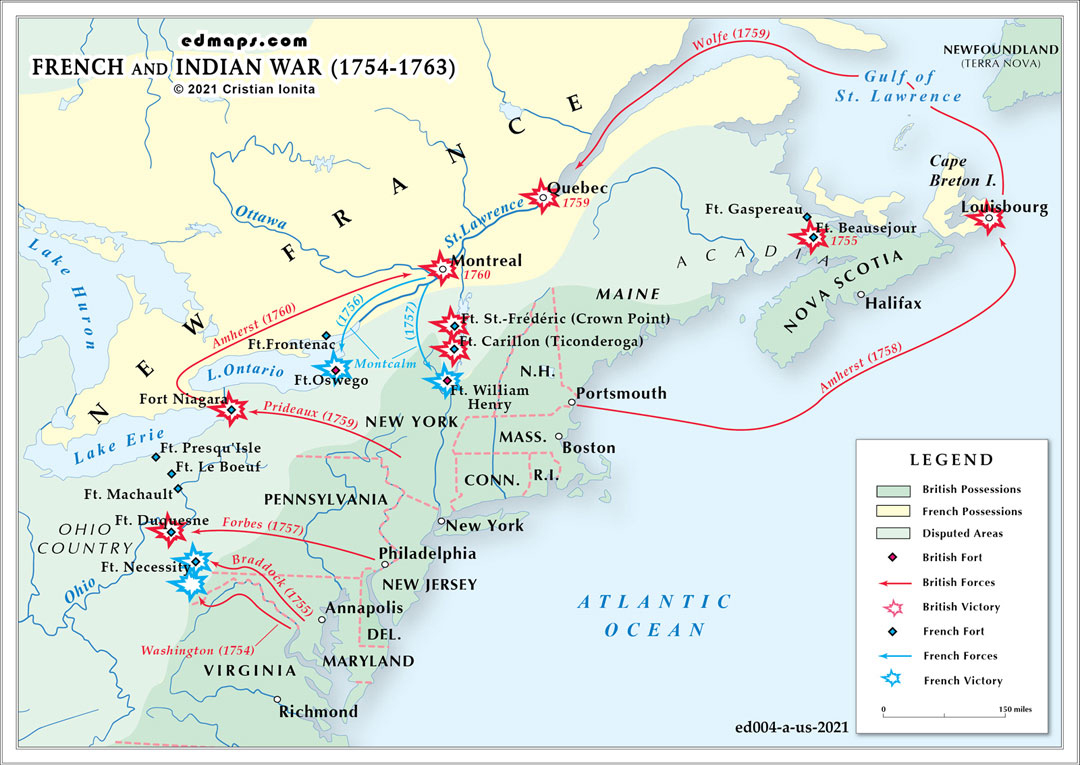
The conflict erupted over competing territorial claims in the Ohio Valley, where Virginia's westward expansion collided with French strategic interests. The war began with George Washington's failed mission to Fort Duquesne in 1754, escalating into a global conflict as both empires recognized that North American territorial control would determine their future imperial status.
Early French successes, including Braddock's defeat (1755) and captures of Fort Oswego and Fort William Henry, demonstrated French tactical superiority and indigenous alliance advantages. However, British naval supremacy gradually isolated New France from European reinforcements. The capture of Louisbourg (1758) severed Acadia from Canada, while the Plains of Abraham victory (1759) secured Quebec City, New France's administrative heart.
The Treaty of Paris (1763) eliminated New France entirely. Britain acquired all French territories east of the Mississippi River, including Canada, the Great Lakes region, and eastern Louisiana. To prevent total British continental dominance, France secretly transferred western Louisiana and New Orleans to Spain in 1762, maintaining non-British control over the Mississippi's western watershed.
New France's sophisticated governmental structure (Governor-General, Intendant, Sovereign Council, etc.) was dismantled and replaced by British military administration. The seigneurial system, French civil law, and Catholic institutions faced uncertain futures under Protestant British rule.
Approximately 65,000 French colonists in the St. Lawrence valley became British subjects, while 10,000 Acadians had been forcibly deported. The destruction of French-Native American alliance systems fundamentally altered indigenous territorial relationships.
New France's elimination removed the primary barrier to British colonial westward expansion, setting the stage for future American territorial growth while concentrating French colonial efforts in the Caribbean and other global regions.