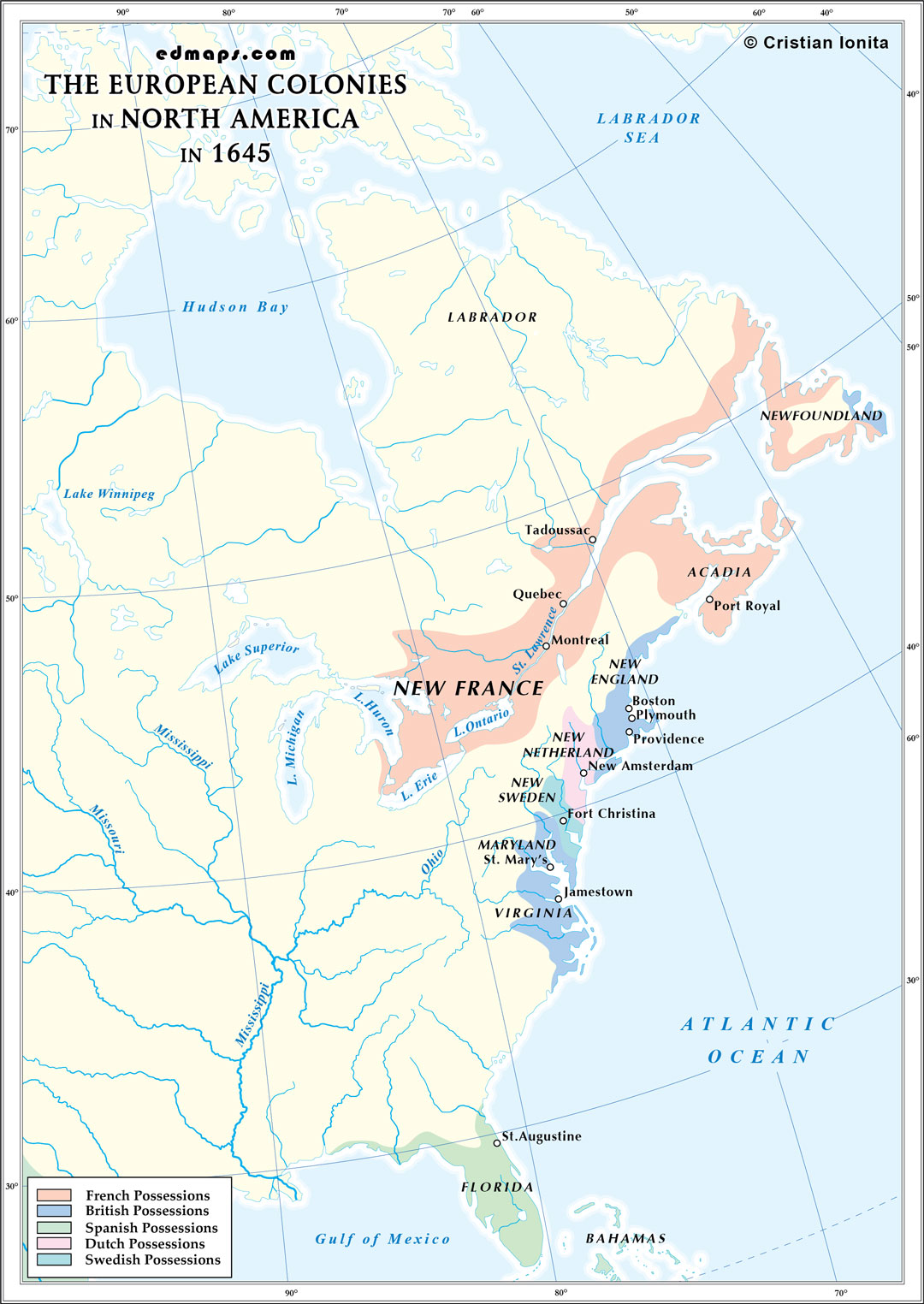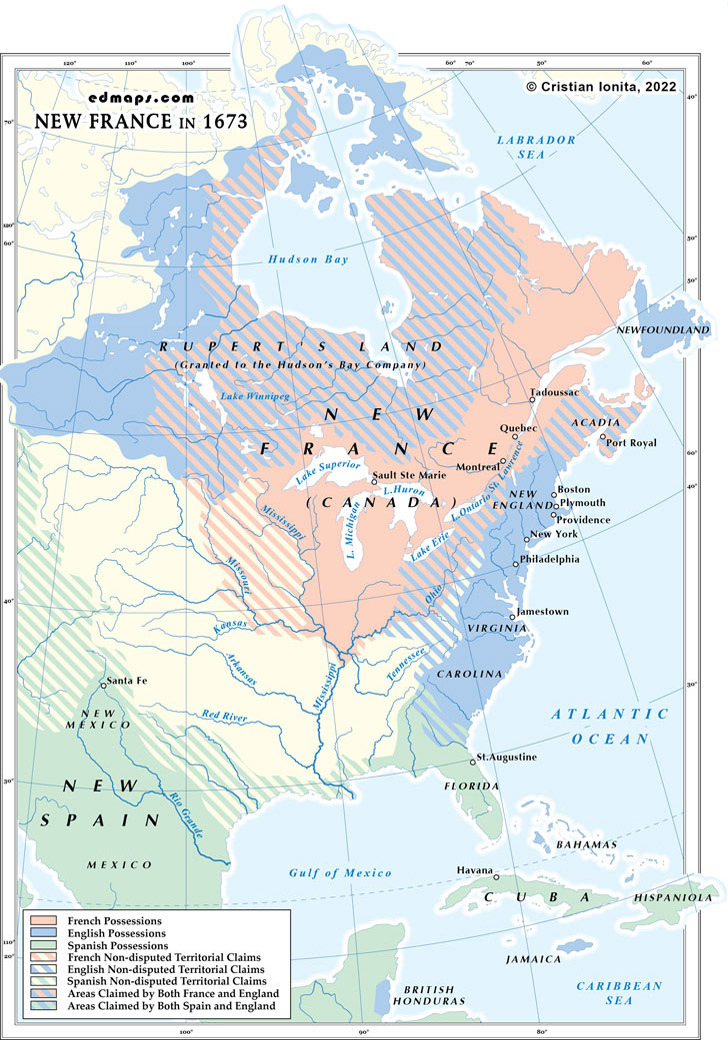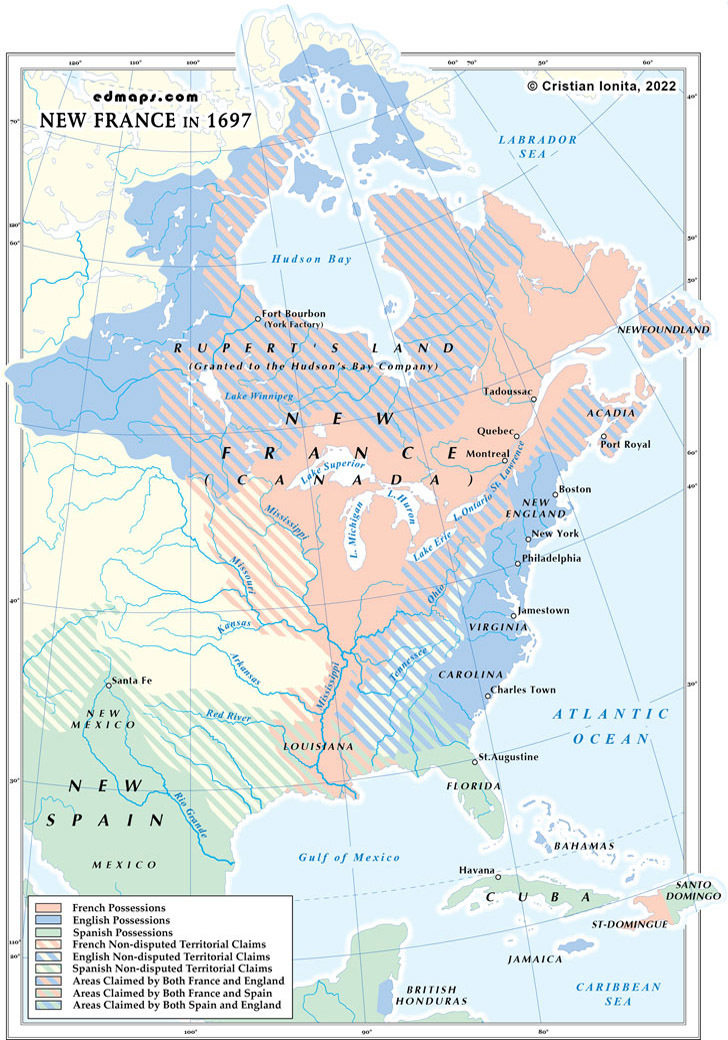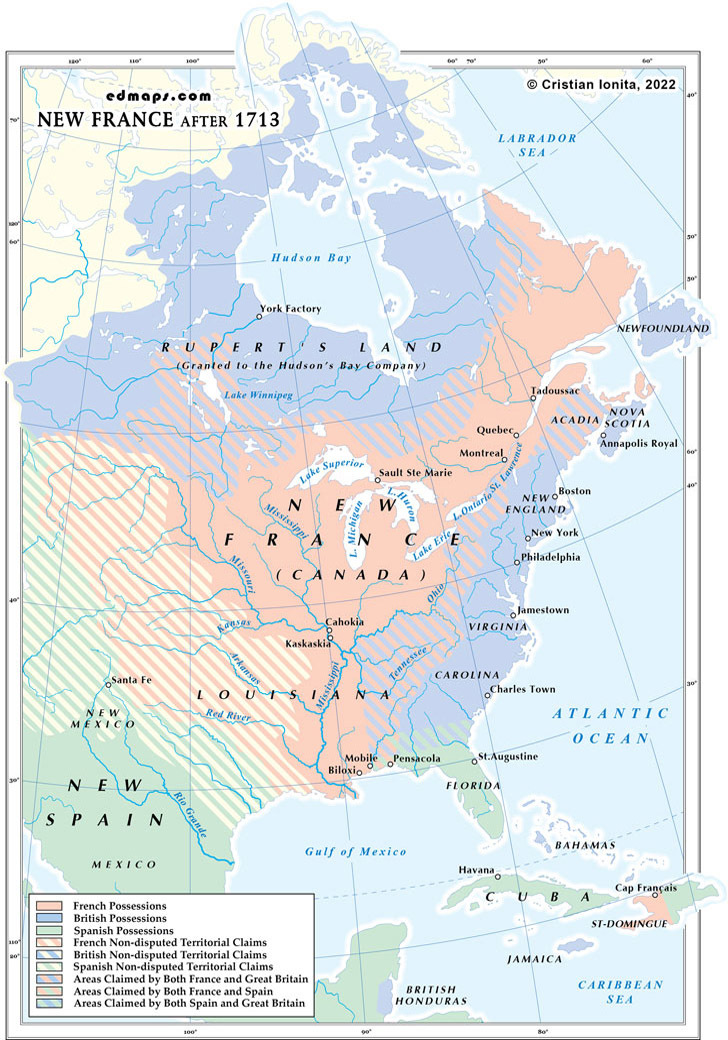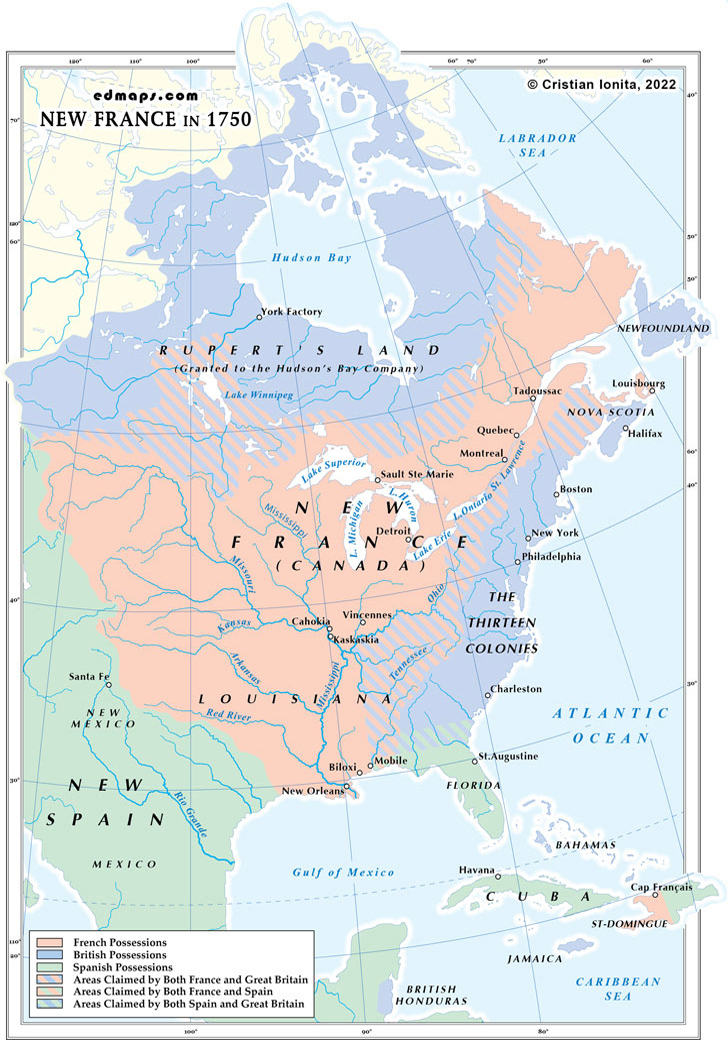
By 1645, North America remained largely under Indigenous control, with European colonial presence limited to small coastal enclaves and scattered interior outposts representing competing imperial claims.
Spain controlled the most extensive territories, including all of Mexico, Florida, the Southwest (present-day New Mexico, Arizona, Texas, California), and Central America. The Viceroyalty of New Spain, administered from Mexico City, governed these vast regions through a hierarchical system of viceroys, governors, and local officials. Key Spanish settlements included St. Augustine, Florida (1565) and Santa Fe, New Mexico (1610), connected by missions and presidios that provided minimal administrative presence across enormous distances.
France claimed the St. Lawrence River valley through New France, centered at Quebec City (1608) and Montreal (1642). The French colonial population remained tiny—fewer than 3,000 settlers—but French explorers and fur traders were extending theoretical territorial claims westward toward the Great Lakes. The Company of One Hundred Associates administered New France under royal charter, though effective control remained concentrated along the St. Lawrence corridor.
English colonies were confined to Atlantic coastal regions with approximately 25,000-30,000 colonists. Massachusetts Bay Colony (1630), Plymouth (1620), Connecticut (1636), Rhode Island (1636), New Hampshire, Virginia (1607), and Maryland (1634) comprised established English territories. Each colony operated under distinct charters with varying degrees of self-governance while remaining subject to English crown authority.
The Dutch West India Company controlled New Amsterdam (Manhattan Island) and the Hudson River valley through New Netherland, competing directly with English expansion.
Native American nations controlled over 95% of North American territory. The Iroquois Confederacy dominated the Northeast, while Cherokee, Creek, Choctaw, and Chickasaw nations controlled the Southeast. Countless Plains, Pacific, and Arctic peoples remained completely independent of European influence, governing vast territories through traditional political structures that Europeans barely comprehended.