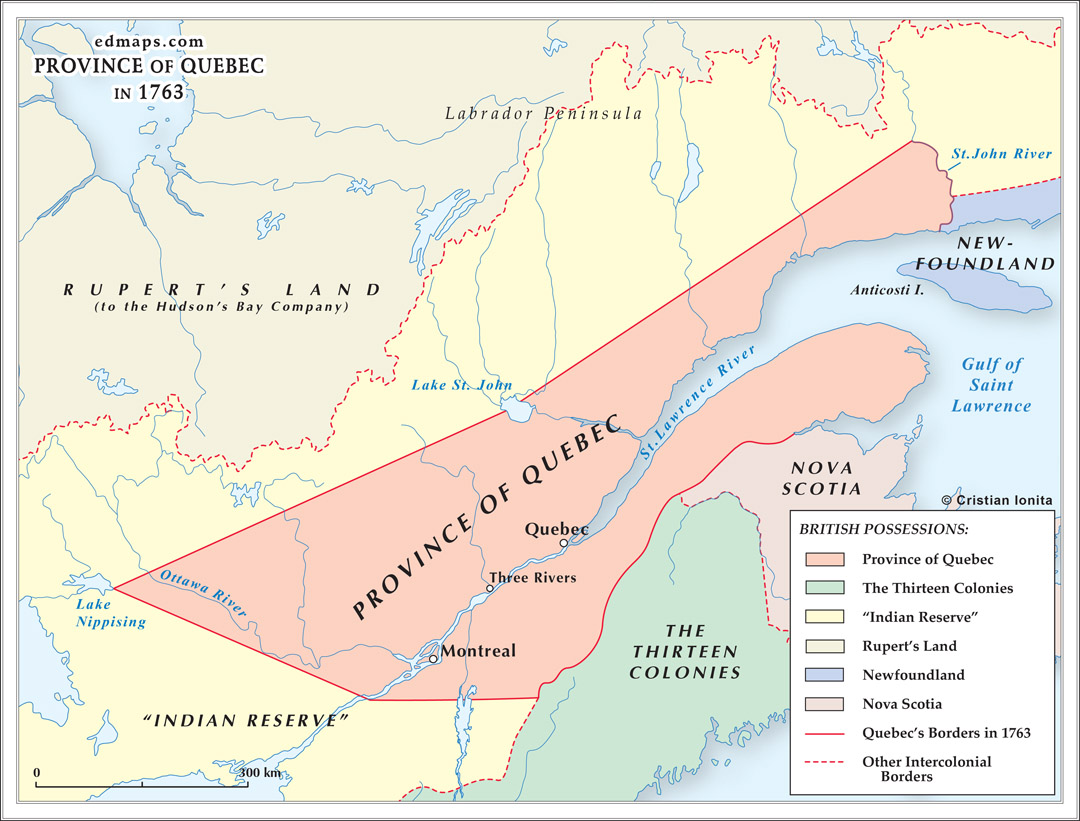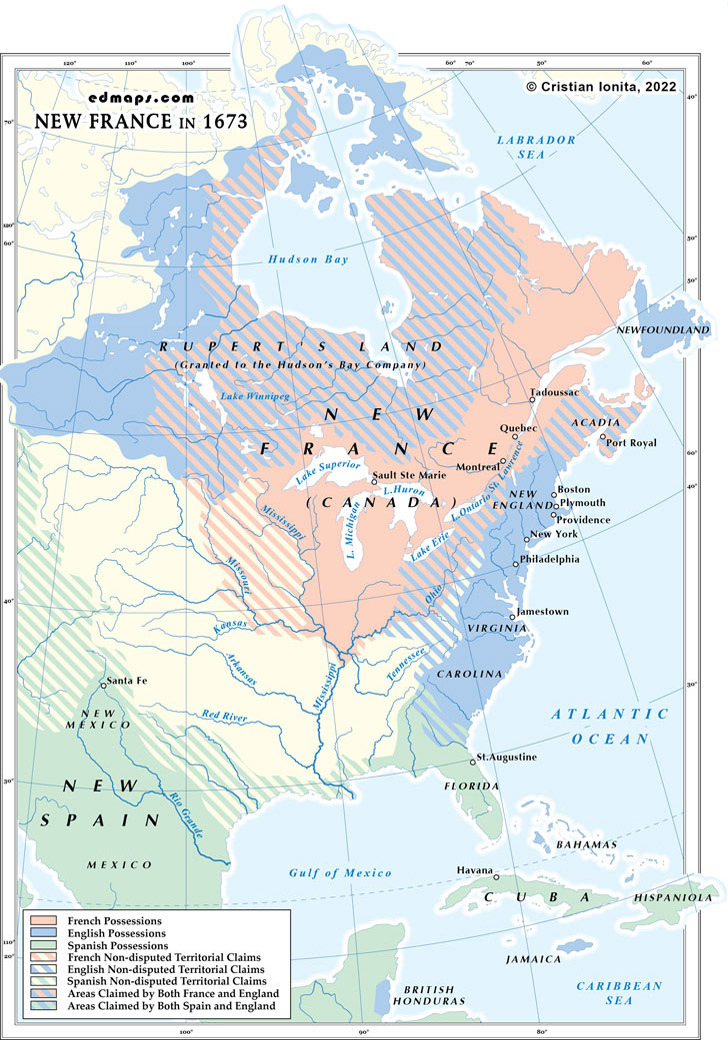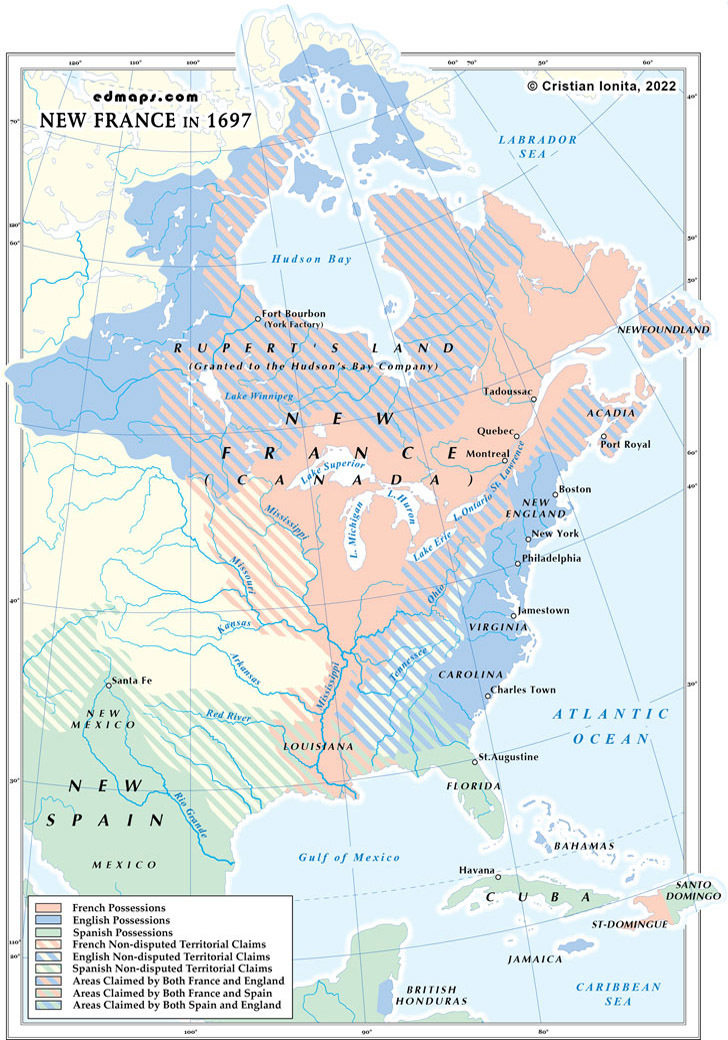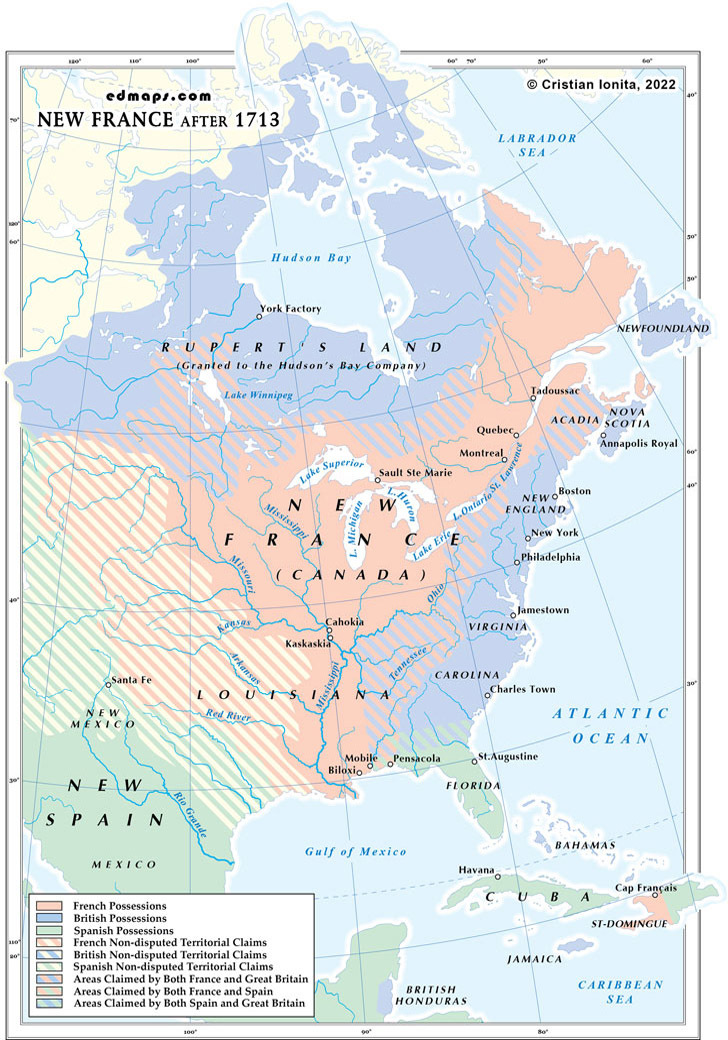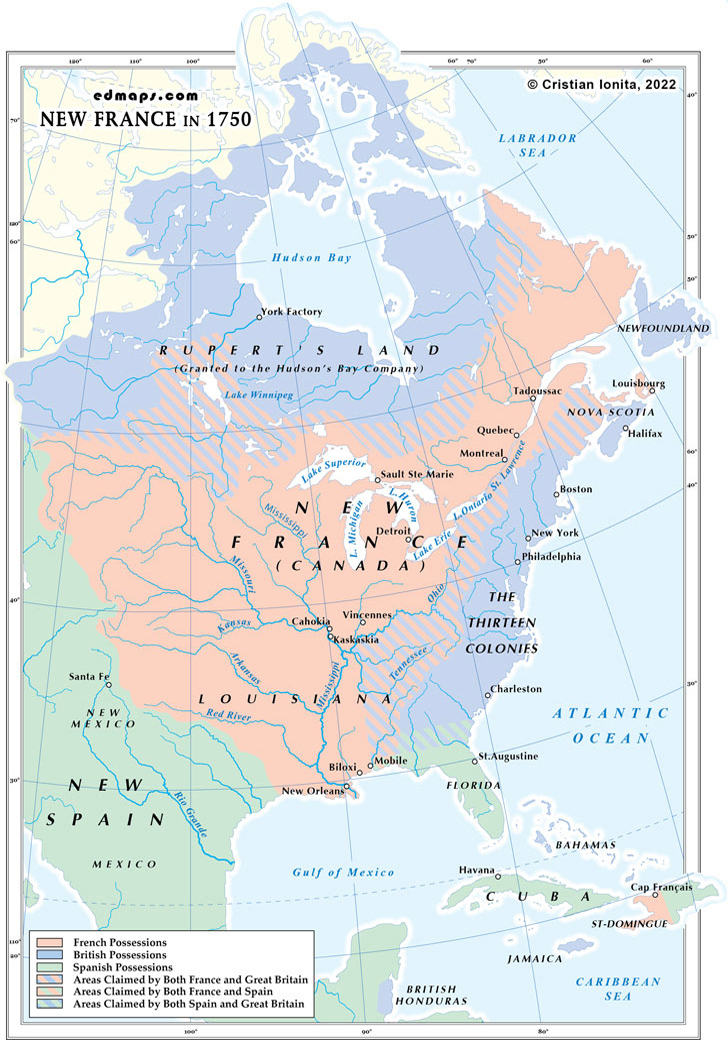
The Province of Quebec was officially born on October 7, 1763, through the British Royal Proclamation, succeeding the former French Canada after the British conquest and the Treaty of Paris. This new colonial entity represented an unprecedented administrative challenge for the British Empire.
The territory of the new province was essentially limited to the St. Lawrence Valley, extending from Anticosti Island to the vicinity of Lake Ontario. This restricted demarcation deliberately excluded the vast regions of the Great Lakes and Ohio, now classified as Indian Territory (Indian Reserve). The total population numbered approximately 70,000 inhabitants, including nearly 65,000 French-Canadian Catholics and only a few hundred new British arrivals, mainly merchants and military personnel concentrated in Quebec City and Montreal.
The Royal Proclamation imposed a British legal framework: English laws, the Test Oath excluding Catholics from public office, and promotion of Protestantism. These provisions theoretically aimed to anglicize and protestantize the province, while encouraging British immigration. However, this policy quickly proved inapplicable in the face of the overwhelming demographic reality of the French-speaking Catholic majority.
Governor James Murray, the first British governor of the province, faced a paradoxical situation. He had to administer a population whose language he did not speak, whose customs he did not understand, and who fiercely maintained their traditional institutions despite official restrictions. The Catholic Church continued to wield considerable influence, the seigneurial system persisted, and the French language remained omnipresent in all aspects of daily life.
This unstable situation could not endure. The inability to attract British settlers in sufficient numbers and the pragmatic necessity of governing this French population effectively would compel London to reconsider its policy, eventually leading to the Quebec Act of 1774, which would officially recognize French-Canadian particularities.